
Just past 6 p.m. on November 24, the traditional jothi (flame) was lit atop the Uchipillayar Koil in the Thirupparankundram hill, marking the celebration of the Karthigai Deepam festival of lights in the State. Soon afterwards, Hindu homes across the temple town lit lamps, even as a tense atmosphere prevailed all over town.
“This is how we celebrate Karthigai Deepam,” said the senior journalist Tharasu Shyam, who hails from Thirupparankundram. “As soon as the lamp is lit on the Uchipillayar Koil, which we can all see, we light the lamp in our homes,” he said, adding that the story of a deepathoon (pillar for lighting a lamp) had no relevance for the people of the temple town.
The Supreme Court, in its interim order of November 20, allowed the lighting of the lamp on the deepathoon, which was a demand of the BJP and right-wing organisations. Despite agreeing to all the stipulations made by the Supreme Court and the Madras High Court, the temple administration did not light the lamp on the deepathoon.
And in doing so, the TVK government followed in the footsteps of the Dravida Munnetra Kazhagam (DMK), which did not comply with a court order in 2025. All TVK allies, including the Congress, the Left parties, the Indian Union Muslim League, and the Viduthalai Chiruthaigal Katchi, welcomed its stand.
While there was a clear Supreme Court order on the lighting of the jothi, the Madurai bench of the Madras High Court intervened on November 24, in one part of the issue, and summoned the authorities. The Madurai District Collector was summoned and the court insisted that he show up. He was questioned on why prohibitory orders (Section 144) were in place in the temple town. The Collector placed before the court that his intention of invoking Section 144 was aimed at stopping unauthorised people from climbing the Thirupparankundram hill.
“It won’t apply to anything done to comply with or give effect to the Supreme Court’s order,” he said. He was advised by the court that he was a civilian authority and a public servant answerable only to the Supreme Court in this matter. He was also told that he should ignore any contrary advice from other authorities. The court noted that officials had defied judicial orders on the issue in 2025, when the DMK was in power.
State contention and court stance
The State’s main contention was that it had filed a review petition against the Supreme Court order dated November 20, but no order had been passed on this petition. The court relied on Israr Ahmed Khan versus Ahmednagar Prasad (2026, SC) and other rulings; it said that a review petition can be filed, but the order must be complied with first. Pending review is not a ground for non-compliance, the court said.
The court also made it clear that none of the officials—the Collector, the Commissioner of Police, the DC/Executive Officer, or the Chairman of the Board of Trustees of the temple—can plead that they could not comply because of the review petition, which was filed on November 21.
It held that the prohibitory order must not be applied in a way that affects the petitioners’ rights. The court repeatedly told the officers that judicial orders can be criticised, even strongly, but no one can demand with impunity that the Supreme Court’s order not be implemented.

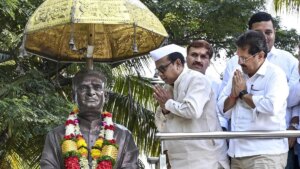
At a protest over the issue of lighting the Karthigai Deepam flame on the deepathoon pillar in Thirupparankundram, in Madurai on November 24, 2026.
| Photo Credit:
PTI
The court agreed with a counsel that it should come down heavily on those openly calling for defiance. Subsequently, in an unprecedented manner, it passed an injunction in the nature of a “John Doe” order, restraining members of the general public from calling for the violation of the Supreme Court’s order dated November 20.
With such stringent orders in place, the authorities went to work. But it was not clear what the government intended to do, as ahead of the November 20 order of the Supreme Court, the State government did not file two crucial pieces of evidence: one, a Tamil Nadu State Department of Archaeology (TNSDA) report on survey stones across Tamil Nadu, and two, a police intelligence report on the same subject.
But a day after the November 20 order, the State government hurriedly released the survey report the next day, and filed a review petition. But given the intervening holidays, the matter could not be taken up for hearing ahead of the Karthigai Deepam festival.
GTS stations report
The report, titled Documentation of the Great Trigonometrical Survey Stations in Tamil Nadu, was prepared by the Tamil Nadu Department of Survey and Settlement (DOSS) and the TNSDA, documenting physically verified GTS stations across the State.
It noted that more than 800 stations were identified in the first phase of the survey, of which 484 stations, comprising 210 primary and 274 secondary stations, were physically documented. “We have identified around 450 survey stones in Tamil Nadu which were placed in several hills. Based on this report, the Supreme Court special leave petition is filed,” a government spokesperson said.
The GTS of India stands out as one of the most significant feats of scientific and technological endeavour undertaken during the colonial era, and its legacy continues to influence modern geospatial sciences.
Initiated in 1802 under the leadership of Colonel William Lambton, the survey was driven by a vision to create a precise and comprehensive geodetic framework for the Indian subcontinent. It involved the meticulous triangulation of vast terrains, spanning from the southern tip at Cape Comorin to the Himalayan peaks, including the mapping of Everest, which was named in honour of Sir George Everest, a pivotal figure in the survey’s progression.
This monumental project employed advanced instruments such as massive theodolites weighing over 1 tonne and involved constructing durable survey stations ranging from solid masonry pillars in hilly regions to brick and stone structures in plains, each carefully marked with control points for accurate positioning, M. Venkadesan, Additional Director, DOSS, said in the foreword to the report.
“The preserved data and physical markers serve as invaluable links to India’s rich heritage of scientific exploration, highlighting the enduring importance of integrating historical knowledge with contemporary technology,” he added.
With the results of the survey in place, Tamil Nadu hopes to convince the apex court that the structure atop the hill is only a survey stone, with nothing sacred about it. But, for now, there is more trouble for the State and its officials. On November 25, the Tamil Nadu government informed the Supreme Court that its order on lighting the jothi atop the survey stone could not be complied with. In a move that raised several eyebrows, the Madurai Collector filed a compliance report, in which he blamed the temple authorities for not carrying out the instructions.
A petitioner named Rama Ravikumar has claimed that the State government and all its organs lied to both the Supreme Court and the Madras High Court. The Supreme Court has granted liberty to the original parties to file a contempt petition against the Tamil Nadu government.
Also Read | From God to king: BJP’s shift in strategy in Tamil Nadu
Also Read | Sabarimala’s season of controversies


Leave a Reply