
At least eight Muslims were killed by state actors in police “encounters” and in custody across six States between August and October, bringing the year’s total to over 27, according to the South Asia Justice Campaign’s latest India Persecution Tracker (IPT) report. During the same period, another eight or more Muslims were killed across four States in religiously motivated hate crimes by non-state actors, whom the report identifies as Hindu extremists. This pushes the 2026 death toll to 33, making it the deadliest year so far in the IPT database, which began in 2022.
Police also shot and injured 118 Muslim men in “half-encounters”: 105 in at least 86 incidents across 31 districts of Uttar Pradesh, and 13 in Delhi, Haryana, Uttarakhand, and Odisha.
The report also cites administrative actions affecting minority and marginalised communities. According to Election Commission of India data, 61.6 million names were removed from draft voter rolls in 18 States and Union Territories by mid-October, in the third phase of the Special Intensive Revision.
On October 17 and 18, authorities evicted more than 1,100 families, predominantly Bengali-speaking Muslims, from forest land in Assam. Residents reported that more than 10 mosques were demolished.
The period covers the run-up to the early 2027 State Assembly elections in BJP-ruled Uttar Pradesh and Uttarakhand, and the second quarter of the party’s first term in West Bengal after its victory in the 2026 Assembly election.
Uttar Pradesh accounted for 103 of the 146 incidents recorded. The report also lists action against mosques and madrasas by West Bengal’s new government.
Anti-Muslim hate speeches
The report says anti-Muslim rhetoric from senior political leaders played a significant role in driving the violence during this period. It states that the Chief Ministers of four BJP-ruled States—Uttar Pradesh, West Bengal, Assam, and Uttarakhand—made remarks targeting Muslims between August and October.
In Uttar Pradesh, the campaign’s Election Watch logged at least 29 anti-Muslim hate speeches over those three months and attributed 13 of them to Chief Minister Yogi Adityanath. One example the report cites is an October 7 speech in which Adityanath called the coming State election an “80 vs 20” battle, a framing critics have read as a reference to the State’s religious demographics and its Muslim minority.
According to the report, Prime Minister Narendra Modi used the word “ghuspaithiya” (infiltrator) in at least six speeches in January and February. In May, Union Home Minister Amit Shah vowed to make the country “ghuspaithiya-mukt” (free of infiltrators).
The UN Committee on the Elimination of Racial Discrimination, in its August observations, noted the “widespread use of racist hate speech targeting Rohingya and Bengali-speaking Muslim migrants and asylum-seekers by politicians and influential public figures”. It urged India to condemn such speech. According to the report, States have not complied with a 2023 Supreme Court directive requiring them to register hate speech cases suo motu, without waiting for complaints.
Demolitions, closures, and arrests
According to the report, BJP-ruled States continued to expand legal and administrative measures affecting minority communities between August and October. At least six mosques across four States were partially or completely demolished in September alone, it says.
In West Bengal, the new government ordered the closure of 252 madrasas and removed 5,299 loudspeakers, about 4,200 of them from mosques, according to Chief Minister Suvendu Adhikari.
The organisation also alleges that authorities in several States made arbitrary arrests and detentions of Muslims and Christians. These included the detention of Bengali-speaking Muslims on suspicion of being undocumented Bangladeshi nationals: 23 migrant workers in Chhattisgarh, and others in West Bengal and Karnataka.
The report also cites continuing arrests under anti-conversion and cow-protection laws in BJP-ruled States, including at prayer gatherings in private homes, and detentions of Muslims over religious expression and after inter-religious clashes.
Protests and detentions
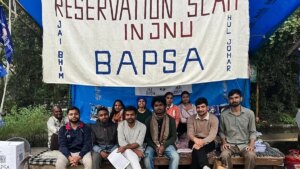
The report also describes the authorities’ response to demonstrations demanding the resignation of Chief Election Commissioner Gyanesh Kumar over the revision of voter rolls. Since late September, according to the report, protests led by opposition parties, students, and the youth-led Cockroach Janta Party have faced mass detentions, the use of force by police, and restrictions on assembly.
Citing the CIVICUS Monitor, the report says police detained about 1,000 protesters on October 2 and suspended internet access around Jantar Mantar. By October 10, CIVICUS reported, at least 7,000 people had been detained.
The UN human rights office expressed concern over the restrictions and urged the authorities to follow standards of necessity and proportionality. The Indian government dismissed the criticism as “unwarranted interference”.
In a statement on October 20, UN experts cited reports that police used force, including lathi charges, against unarmed students and moved more than 7,000 detainees in New Delhi to remote facilities, where mobile phones were allegedly confiscated and protest footage deleted. They also raised concern over reports of sexual violence during the demonstrations and detentions, and over the broad use of prohibitory orders and internet shutdowns under Section 163 of the Bharatiya Nagarik Suraksha Sanhita.
The experts noted that the demonstrations were linked to voter roll deletions affecting an estimated 130 million people, reportedly mostly Muslims, Scheduled Castes, and Scheduled Tribes. They called for an end to excessive force and for an independent investigation.
Access to justice
The report describes a systemic breakdown in access to justice. It says that at every stage of the accountability process, from initial police filings to independent inquiries, Muslim victims routinely met institutional obstacles that nullified domestic legal remedies.
In many cases, it says, police refused to register complaints or pressed charges against the victims instead. In Uttar Pradesh, a government-appointed panel cleared the police of wrongdoing in the deaths of five Muslim men in Sambhal in November 2024. The men were killed while protesting a court-ordered survey of the town’s main mosque.
The same government dropped charges against one of its own Ministers and other Hindu nationalist figures over speeches made before the 2013 Muzaffarnagar violence, in which more than 60 people, mostly Muslims, died.
(with inputs from the report)
Also Read | The unmaking of the Indian citizen
Also Read | ‘How long must a mother wait?’
Leave a Reply